
When leaders fail to steward the organization's management system, the organization accumulates inertia. It can then repeatedly launch "transformations" that are often relabeling of efficiency, cost, technology or other initiative work rather than a genuine change that impacts vision, objectives, products, services, assets, operations and people.
Change is Hard. Inertia Makes it Harder
Inertia comes from physics, the tendency of an object to resist change to its state of motion. Without ongoing attention and actions to maintain ways of working that foster resilience, organizations face the risk of inertia. Organizational inertia is not the sum of individuals resisting change, but can be a consequence of the structures, incentives, routines, and decision makings through the organization's operations. This can cause individuals who otherwise would support the change to stick with established ways of working.
Inertia is not always a bad thing; some stable routines and established structures can protect reliability, institutional knowledge, and performance. The key for leadership is to be able to identify when existing arrangements no longer serve its purpose, and then actively adapt.
In "Understanding Inertia in Digital Transformation: A Literature Review and Multilevel Research Framework" (2021), Thomas Haskamp et al explores how organizational inertia acts as a major roadblock to successful organizational and digital transformations (1). Drawing on established literature, they identify four dimensions of inertia:
- Structural inertia. Related to an organization's size, deep interdependencies of the existing structures, systems, procedures, and processes.
- Cultural and Socio-cognitive inertia. These are the information norms, values, habits, social networks, and ingrained mental models or worldviews that resist new ways of operating.
- Socio-Technical inertia. Legacy IT infrastructure and operational workflows can lock the organization into outdated paradigms. Exploration and exploitation of new technology is difficult.
- Political and economical inertia. Internal power dynamics, vested interests, and sunk costs that favor the preservation of existing models over exploring new ones.
I believe a strong counter to inertia is stewardship. Change must start somewhere, and for many organizations that change is a transformation.
What is Transformation?
Let's align on what a transformation is so we can move on to why they are needed, and how organizational stewardship may help. To transform is to change, and when we are talking about business or organizational transformation, this is typically a large-scale endeavor of both planning and execution. A transformation is not a tool purchase or a temporary project/initiative; the transformation will end, but the changes and capabilities created should be enduring. Ideally, a transformation shifts the organization to a state of continuous adaptability rather than having some hard-set finish.
A transformation is going to impact multiple, sometimes all of the following areas:
- Vision and Strategy. The company's long-term purpose may be reoriented along with their market position.
- Objectives and Measures. Financial metrics, key performance indicators (KPIs) and accountability frameworks measure new types of value creation.
- Products & Services: Legacy offerings are retired; new or substantially redesigned products become the norm. Business models change and evolve to meet customer expectations.
- Assets. Reallocating physical, financial, and digital capital away from declining ventures into future-oriented investments.
- Operations and Processes. Re-engineering workflows, supply chains, governance and the decision-making cycle so the organization runs faster, leaner and most importantly, with high resilience.
- People and Culture. Talent is up-skilled, teams restructured, leadership behaviors are reshaped, and a direct effort to ensure the buy-in of new culture happens across the organization.
Put simply, a transformation is a big deal and will have a significant impact on stakeholders, especially team members. Transformations are necessary at times, but I believe the need for transformations can be significantly reduced through strong organizational stewardship. If an organization repeatedly launches transformations, it may mean they are not actually transforming and instead are simply reacting.
Organizational Inertia and Transformations
Organizations accumulate structures, routines, expectations, incentives, technologies and power relationships which reinforce the existing ways of working and make alternatives difficult to implement. A transformation may introduce new objectives, structures or technology without changing the arrangement that produce the behavior the transformation seeks to change. As a result, familiar problems can reappear, creating pressure for another transformation.
The Causal Chain of Repeat Transformations
A concept for why organizations go through repeated transformations, which may happen over multiple years, is illustrated in Figure 1. My claim is not that this is the only reason for repeated transformations or that all transformations are caused by a lack of organizational stewardship. Repeat transformations without management-system renewal is a warning sign that the organization is not focusing on what may be driving the issues which cause the need for a transformation..
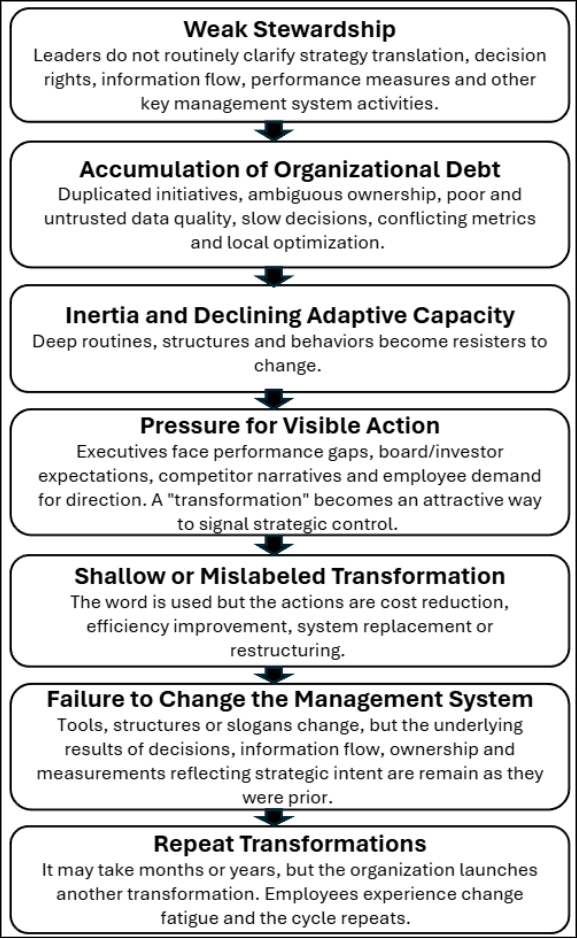
Figure 1 Repeat Transformation Causal Chain
A transformation can deliver its immediate financial or operational targets while failing to build the organizational capabilities needed to sustain the result. An initiative that builds capacity without delivery of necessary economic results is also insufficient. A successful transformation must consider both the results it is meant to achieve and the organization's ability to sustain and adapt those results afterwards.
In their 2000 article "Cracking the Code of Change", authors Michael Beer and Nitin Nohria example why approximately 70% of organizational change initiatives fail (2). Their argument is that transformation (in their article, this is corporate transformation) has traditionally been treated as a zero-sum choice between change based on economic value ("theory e") and change based on organizational capacity, ("theory o"). Economic-driven transformation focuses on maximizing shareholder value, are typically top-down driven, have hard structures with focus often on restructuring and are event driven by financial metrics; consultants push solutions. Organizational capability building transformations on the other hand have the primary goal of building corporate culture and learning, are participatory and bottom-up, focus on team building and communication, change is gradual and ongoing and facilitators help the organizational solve its own problem; consultants push for organizational independence.
Beer and Nohria conclude that to "crack the code", transformations need to embrace and integrate both approaches. Of note is their advice for organizations to use consultants as a resource who empower employees. Employees need to own the change rather than outside advisors. I do not suggest here that these theories represent all possible approaches, but they provide a useful framework for understanding the two necessary orientations.
The guidance on how to achieve this balance is a legitimate value offering of consultants. Where leaders need to be careful is who they allow to drive the work. Consulting firms with overhead and the need to impress and overachieve may focus too heavily on the economic side of transformation. A balance is needed so that the financial aspects of the organization are healthy and sustainable, while still growing overall organizational capabilities.
Digital Transformations: Technology Inertia.
Many digital transformations are not true transformations in that they do not alter how the organization creates customer value, makes decisions, serves customers, configures assets/operations or develops people. Instead, they are system replacements, process automation, cost/headcount reduction, and other types of initiatives.
In order for a digital transformation to be successful, the organization must have clear answers to who owns what data, who owns decisions, how data and other information moves through the organization, what measures matter and how to measure them, and how digital choices translate into operating decisions. These are all elements of a strong management system.
Repeated digital transformations may be necessary for legitimate technological or strategic reasons. However, organizations who repeatedly replace technology and/or processes without changing the management arrangement that govern how technology, data, decisions and other resources are used, they risk reproducing the same operational problems with new tools.
Organizational Stewardship to Avoid Inertia
Organizational stewardship emphasizes leaders and team members acting in the collective, long-term interest of the organization rather than narrow, self-interest or control-driven ways. This means ongoing work to examine and maintain the arrangements through which the organization operates, including checking whether authority, measures, information, priorities, and routines still support the organization's purpose and current strategy(s).
At the time of writing this article, empirical evidence is not available that would allow me to state firmly that there are clear links to a lack of management-system focus through organizational stewardship which then leads to repeat transformations. My theory is that organizations that continuously steward their management systems should require fewer episodic transformations, because adaptation occurs through ongoing adjustment. Active creation and ongoing investment in the management system creates organizational agility and resilience.
My view of the management system is that there are seven domains, each of which provide several mechanisms for stewardship; see my other article and video "What is a management system" for a detailed view of my organization and management system view. Each domain functions individually, and they have a high degree of interconnectedness with each other. The seven domains are strategy translation, decision rights, governance, information flow, performance management, operational cadence, and learning loops. Below is a brief illustration of how each domain can reveal organizational inertia:
- Strategy Translation can reveal if priorities still reflect the organization's direction.
- Decision Rights and Governance can reveal where authority is unclear, duplicated or disconnected from accountability.
- Performance Management can reveal whether measures reinforce outdated behavior.
- Information Flow can reveal whether people have the information required to recognize and respond to changing conditions.
- Operational Cadence can reveal whether the organization has regular opportunities to review and adjust its work.
- Learning Loops can reveal whether experience and results actually change how the organization operates.
When organizations set and forget things like policies, procedures, organizational structure and digital controls, this is a prime breeding ground for inertia. The same is true when these objects are used for compliance and aesthetic reasons rather than as fundamental truths about how leaders expect the organization to behave.
Change is constant, and so should be how organizations evolve. This does not mean continuous disruption or change practically; it requires an active understanding of how things actually work in the organization, not simply assuming what leaders and people say is reality. This is accomplished by periodically examining whether existing arrangements remain fit for purpose, using evidence.
Towards Adaptability and Resilience
What does it look like when stewardship is working? Reoccurring problems results in changes to how the organization operates. Measures and incentives reflect the current strategies and priorities, not just history or simplicity. Lessons are learned and affect changes to policies, decisions, routines, and controls. After a major transformation, the organization has stronger, sustainable capabilities. Finally, the organization can adapt without repeatedly disrupting its entire operating model.
Repeated transformations are not necessarily evidence of failure. However, if each new transformation responds to problems the previous transformations were supposed to resolve, leaders should ask if they are changing the conditions that produce those problems.
Organizational Stewardship as an Alternative to Repeated Transformation
Transformations remain necessary; markets change, technologies evolve, but they should not be the organization's default mechanism for adaptation. By building and maintaining a strong management system that allows the organization to learn and adjust continuously, I suggest repeated transformations can be avoided. Transformations should be judged not simply by meeting one-time targets, but how it provides value and creates ongoing adaptability/agility and resilience. The objective is not to have literal constant change in a disruptive manner, but to regularly assess where change is required.
Are decision cycles short with clear accountability? Do measures and incentives reinforce the intended priorities? Does information reach the people who need it? Are meetings held for value and purpose? Do lessons learned lead to changes in how work gets done? These and other questions can help leaders reflect on their organization and make informed decisions on how best to proceed.
Repeated transformations should prompt a question; are we responding to genuinely new conditions, or are we repeatedly addressing problems our management system continues to reproduce?
If a transformation is required, be sure to balance economic and organizational capability needs, and use the transformation as the platform that creates the sustainable management system.
References
(1) Haskamp et al. (2021) Understanding Inertia in Digital Transformation: A Literature Review and Multilevel Research Framework.
(2) Beer, M., & Nohria, N. (2000). Cracking the Code of Change. Harvard Business Review.